Pruning and trimming
Structural pruning, clearance pruning, and deadwood removal to reduce risk and guide growth without over-thinning the canopy.
Serving Baltimore, Maryland & surrounding areas
Arborist service · Baltimore
Tree Removal Baltimore provides safe, well-planned tree work for homes and commercial properties across Baltimore, from pruning and risk reduction to removals and full debris cleanup.
Practical arborist care
If you searched for arborist Baltimore, you are usually trying to solve one of three problems: a tree looks unsafe, it is damaging property, or it has grown past the point where basic yard work can keep up. A qualified arborist brings training in tree biology and structure, plus the equipment and planning to do the work without damaging nearby roofs, fences, sidewalks, or neighboring trees.
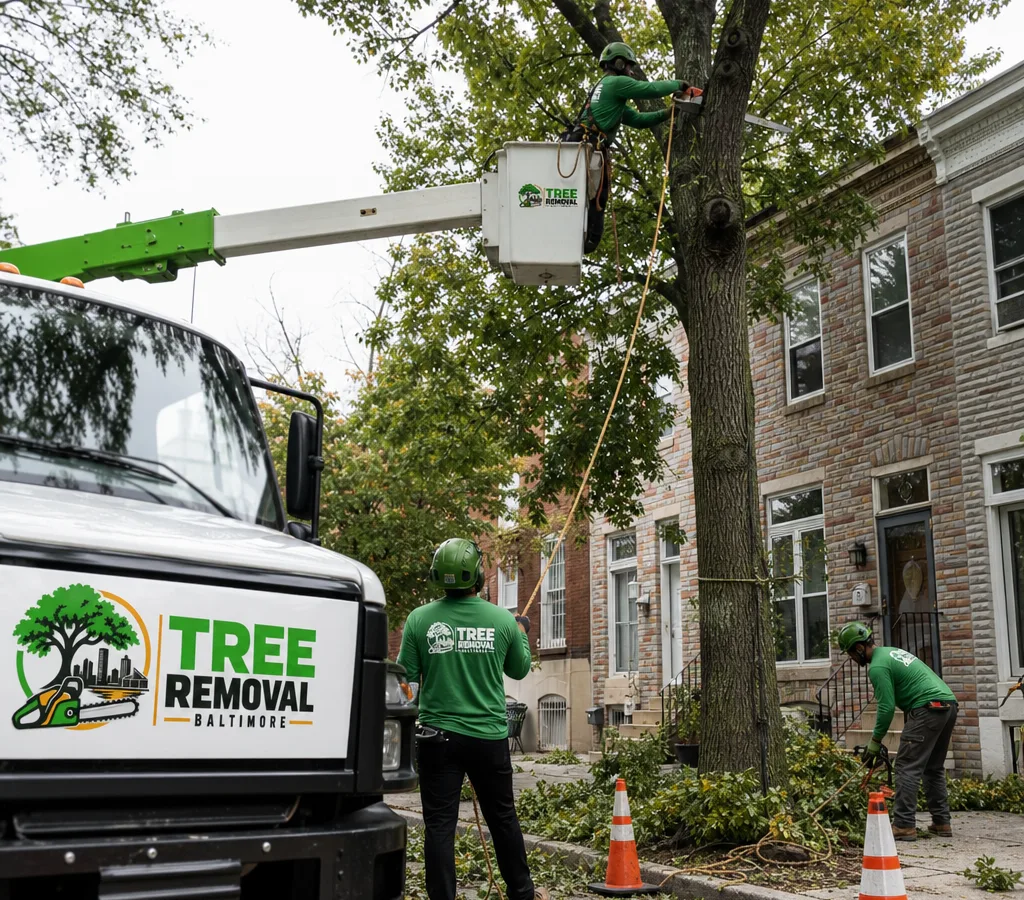
In Baltimore, trees often sit close to buildings, alleys, and overhead lines. That tight access changes how the work is done. A good arborist will start with a simple, practical assessment: what is the target—house, garage, cars, or utility lines—what is the failure risk—dead wood, cracks, decay, lean, or root issues—and what is the best method: climb and rig, bucket access, or sectional dismantling.
Tree Removal Baltimore focuses on clear scopes and safe job setup. You should expect an explanation of what will be cut and why, where debris will go, what gets protected, and how the crew will control pieces coming down with rigging, lowering lines, and designated drop zones. If a plan is not clear before work starts, it is worth pausing and asking questions.
Complete service scope
Structural pruning, clearance pruning, and deadwood removal to reduce risk and guide growth without over-thinning the canopy.
Section-by-section removals using climbing and rigging or truck access where available, with careful control near homes, garages, and fences.
Priority help for hanging limbs, split trunks, and trees that shifted after wind or heavy rain, with safe stabilization and cleanup.
Branches, logs, and brush are removed from the property so you are not left with a pile after the crew leaves.
On-site assessment of decay, canopy dieback, weak unions, and root-zone issues, followed by straightforward recommendations.
If you plan to replant, pour concrete, or restore turf, we can explain stump and root considerations so the next step is not a surprise.
Access and property protection
Many Baltimore properties have narrow side yards, rear parking pads, and shared alleys. That affects access for trucks, where brush can be staged, and how wood can be lowered safely. Our approach is built around control and communication.
Before cutting, we identify targets and set a drop zone. When a straight drop is not safe, we use rigging to lower limbs and trunk sections in a controlled way. We also plan foot traffic and parking impacts, especially on busy streets where a work zone has to stay organized.
Neighborhood layouts can vary block by block. A rowhouse street in Federal Hill may have limited curb space and tight rear access, while many homes in Hamilton have larger yards where equipment positioning is simpler. In areas like Roland Park, mature canopy trees can mean more complex pruning decisions and larger material to handle.
Wherever you are, the goal is the same: do the work cleanly, protect what is around the tree, and leave the property ready to use. For customers comparing options, our overview of tree removal in Baltimore City explains when removal makes sense versus other approaches.
Assessment to cleanup
We look at the tree's condition, nearby targets, access for equipment, and any clearance issues. Then we outline the work in plain language: what gets cut, what stays, and what the cleanup includes.
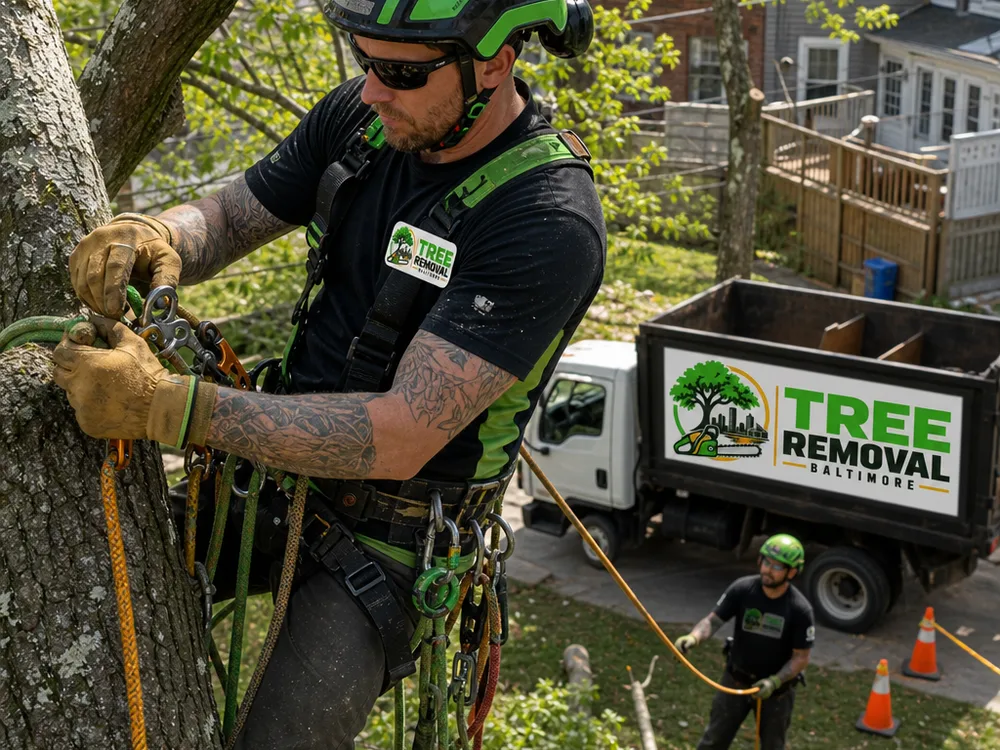
The crew sets a work zone, protects sensitive areas when needed, and chooses the safest method for the site: climb-and-rig, bucket access, or controlled dismantling.
Limbs and sections are cut and controlled to avoid impact damage. Brush is consolidated and removed, and logs are handled based on the agreed scope.
We confirm the requested work is complete, check for overlooked debris, and leave the area as clean as practical for a job that involves cutting and hauling wood.
On-site pricing
Arborist work in Baltimore typically runs about $250 to $1,500+ for most residential jobs, depending on whether it is pruning, a hazardous limb, or a full removal. Small pruning or deadwood cleanups may fall near the low end, while complex removals near structures or with limited access often land higher.
Price changes with tree size and species, how much rigging is required, obstacles like fences or nearby roofs, and whether debris haul-off is included. The exact cost is confirmed after an on-site assessment of the tree and access.
Homeowner proof
“Our maple had a long limb over the roof that started cracking. The crew walked me through the plan, lowered everything with ropes, and cleaned up the yard better than I expected.”
“We needed pruning around service lines and a narrow driveway. They worked carefully, kept the area organized, and nothing got damaged.”
Practical answers
Plan the safest approach
Tell us what you are seeing—leaning tree, dead limbs, storm damage, or a tree that has outgrown the space. We will recommend a safe scope, explain the approach for your property, and schedule the work with cleanup included.