Material protection
Salvage-first sorting
We separate reusable wood early so it does not get mixed into general debris piles where it is damaged or contaminated.
Serving Baltimore, Maryland & surrounding areas
One call instead of ten No web forms, no callback spam 24/7 Emergency Response
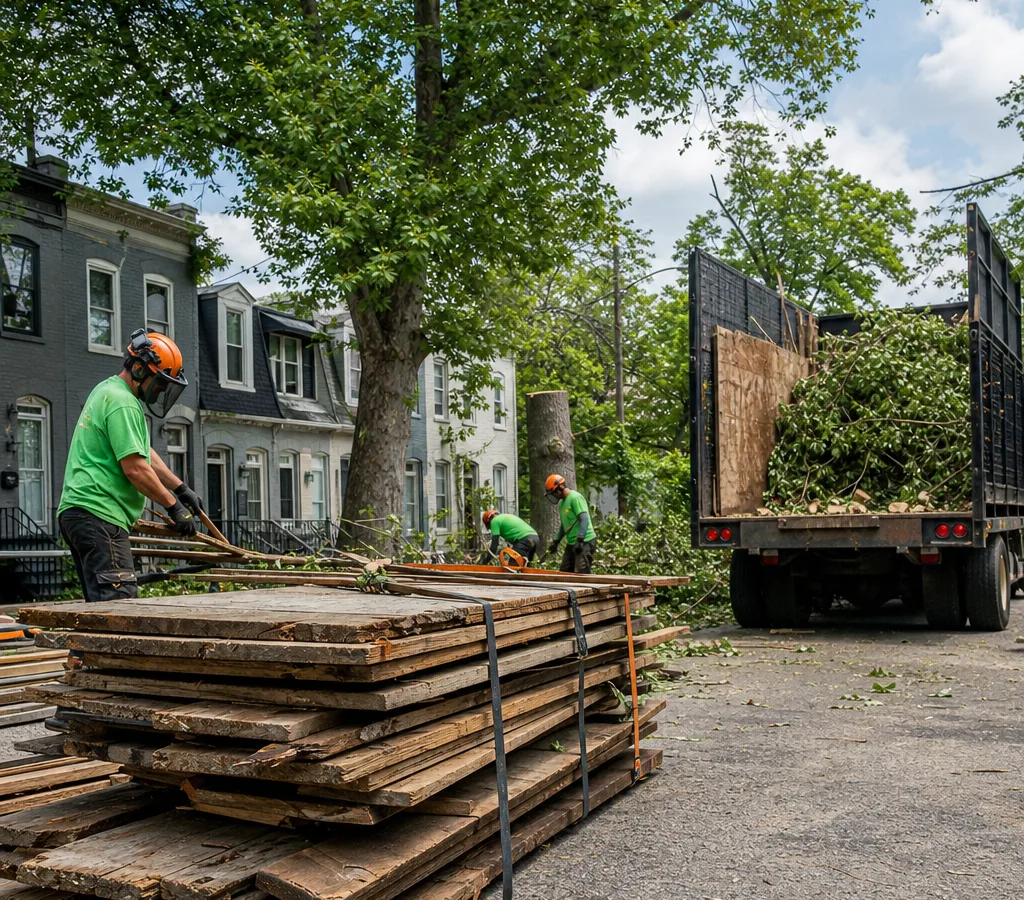
Reclaimed wood · Baltimore
Keep usable lumber out of the landfill and get it recovered safely from removals and site clearing. We sort, denail, and stage salvageable wood so it can be reused on your schedule.
✓ Skip the 3-hour Google rabbit hole — we’ve already done the vetting
✓ One conversation, not ten voicemails and seven web forms
✓ 24/7 response — talk to a real person who actually knows Baltimore tree service
A real person answers - 24/7 Emergency Response
Practical material salvage
If you are searching for reclaimed wood Baltimore services, you usually have one of two goals: salvage quality material for reuse, or reduce waste during a removal or clearing project without slowing the schedule. Tree Removal Baltimore provides reclaimed-wood recovery as a practical, job-ready process. We separate salvageable wood, remove fasteners when appropriate, and stage material for pickup, storage, milling, or reuse.
Reclaiming wood is different from hauling debris. Salvage means protecting what is usable while still keeping the site safe and moving. That starts with a quick look at what is actually worth saving. Old-growth framing, dense hardwood, and thick timbers can be excellent candidates, while water-damaged or heavily treated pieces may need to be set aside. We help you make those calls with a clear, on-site plan.
Many Baltimore properties include older garages, sheds, fences, and outbuildings where lumber quality can be surprisingly good, even if the structure itself is at the end of its life. Reclaiming that material is also a clean way to support local reuse, whether your next step is a carpenter, a reclaimed-wood supplier, or a small DIY project.
Recovery scope
A good reclaimed-wood pickup is organized, not rushed. We focus on material categories that commonly salvage well and can be staged safely:
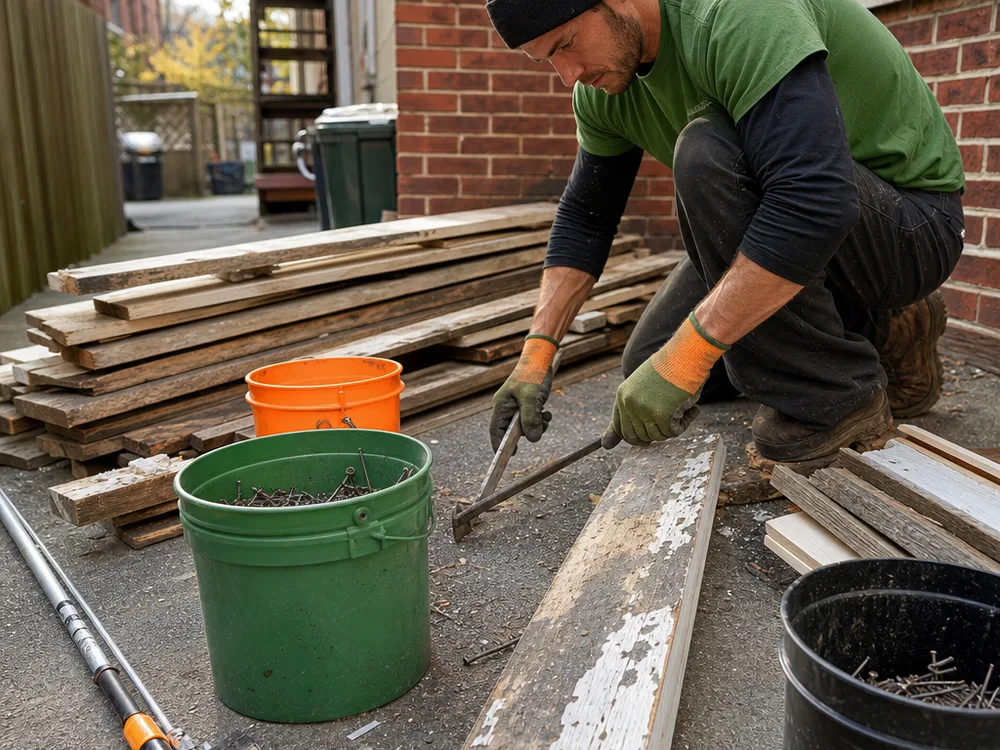
Our crew sorts by type and condition, then bundles or stacks wood off the work path so other trades are not stepping over it. Nails and screws are a safety issue first, so we denail where it makes sense, and we mark pieces that still need metal removal. If you have a specific destination in mind—storage, a shop, or a community reuse outlet—tell us up front so we can stage the material to match its acceptance rules.
In neighborhoods with tighter access like Federal Hill or Fells Point, space is often the limiting factor. We plan for smaller staging areas and quicker load-outs so reclaimed material does not become an obstacle or hazard.
Job-ready recovery
Material protection
We separate reusable wood early so it does not get mixed into general debris piles where it is damaged or contaminated.
We stack and bundle with jobsite safety in mind, including fastener awareness, clear walk paths, and stable piles.
Rot, severe checking, heavy paint buildup, or chemical treatment can make reuse unrealistic. We help identify keep versus discard quickly.
Baltimore alleyways, narrow driveways, and street parking rules can change the plan. We adapt staging and load-out to the property.
If you are sending material to a shop, builder, or storage, we can stage by length and type so the next step is straightforward.
Assessment to handoff
We walk the area to identify salvage candidates, confirm access for moving material, and agree on what is being saved versus discarded.
We remove wood carefully where feasible and keep reclaimed material separate from mixed debris to protect usable faces and edges.
Fasteners are removed when practical, and any remaining metal is flagged so the wood can be handled and processed safely later.
We organize by size and condition, then stage in a location that keeps entrances, sidewalks, and work zones clear.
Depending on your next step, we load reclaimed wood for transport, stage it for a pickup window, or consolidate it for longer-term storage.
On-site pricing
Reclaimed wood recovery in Baltimore typically ranges from about $250 to $900+, depending on how much material is being salvaged and how much selective pulling, denailing, and staging is needed. A small, straightforward stack-and-haul from a light demo or clearing job often falls on the lower end, while larger volumes, tight access, and heavy fastener removal raise the cost.
Pricing changes most with wood volume and weight, site access such as alleys, stairs, and carry distance, fastener density, and whether the wood is coming out intact or already loose. The exact cost is confirmed after a quick on-site review of the material and the load-out plan.
Baltimore site conditions
Reclaimed wood is only valuable if it stays usable. A few Baltimore-specific realities tend to influence how recovery is planned:
If your reclaimed-wood work is connected to a larger property or site project, start with a simple intake so the salvage plan matches the overall timeline. Many clients begin with a quick discussion through Tree Removal In Baltimore City→ so we understand access, scheduling, and what materials you want to keep.
Homeowner proof
“We asked for the usable boards to be kept separate during the cleanup, and that is exactly what happened. The stack was organized, and the nails were handled so we could move it safely into storage.”
“Access was the hard part for us. The crew staged everything in the back without blocking the alley, and the reclaimed pieces stayed in good shape instead of getting tossed into a mixed pile.”
Practical answers
Plan a safe recovery
Tell us what material you are trying to reclaim and what the next step is for it. We will confirm what is realistically salvageable, how it will be staged safely, and what the schedule looks like for your Baltimore property.
A real person answers - 24/7 Emergency Response