Size and weight of the wood
Diameter and canopy spread matter as much as height. Bigger wood means heavier rigging loads, more cuts, and more disposal.
Serving Baltimore, Maryland & surrounding areas
One call instead of ten No web forms, no callback spam 24/7 Emergency Response
Tree removal pricing · Baltimore
Get a clear, written scope and a realistic price based on your tree, your access, and what has to be protected. We price the work you actually need, then explain the options before any cutting starts.
✓ Skip the 3-hour Google rabbit hole — we’ve already done the vetting
✓ One conversation, not ten voicemails and seven web forms
✓ 24/7 response — talk to a real person who actually knows Baltimore tree service
Typical residential ranges
Tree removal cost in Baltimore typically ranges from about $450 to $2,500 for most residential jobs. A small, straightforward tree with easy access often lands around $450 to $900, while medium removals commonly run $900 to $1,800; large, high-risk removals with rigging or a crane can reach $2,500 to $6,000+. Your final price changes with tree size, lean and condition, proximity to structures/lines, access for equipment, and whether stump grinding and debris haul-off are included. Exact pricing is confirmed after an on-site assessment.
📞 Baltimore • 24/7 ResponseRisk and access factors
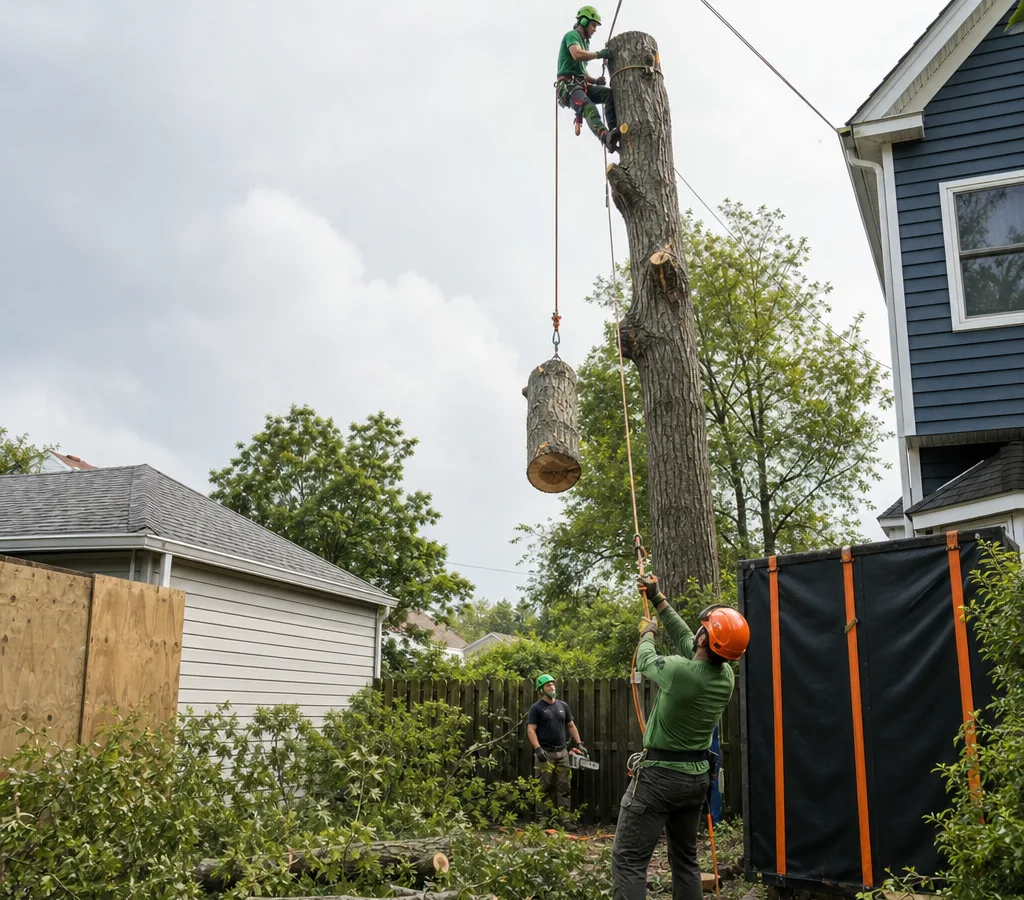
The price for removing a tree is mostly a risk-and-access equation, not just a height estimate. Two trees that look similar from the street can price very differently once you factor in what's below the canopy and how a crew can safely control the drop.
The biggest cost drivers we see in Baltimore
Diameter and canopy spread matter as much as height. Bigger wood means heavier rigging loads, more cuts, and more disposal.
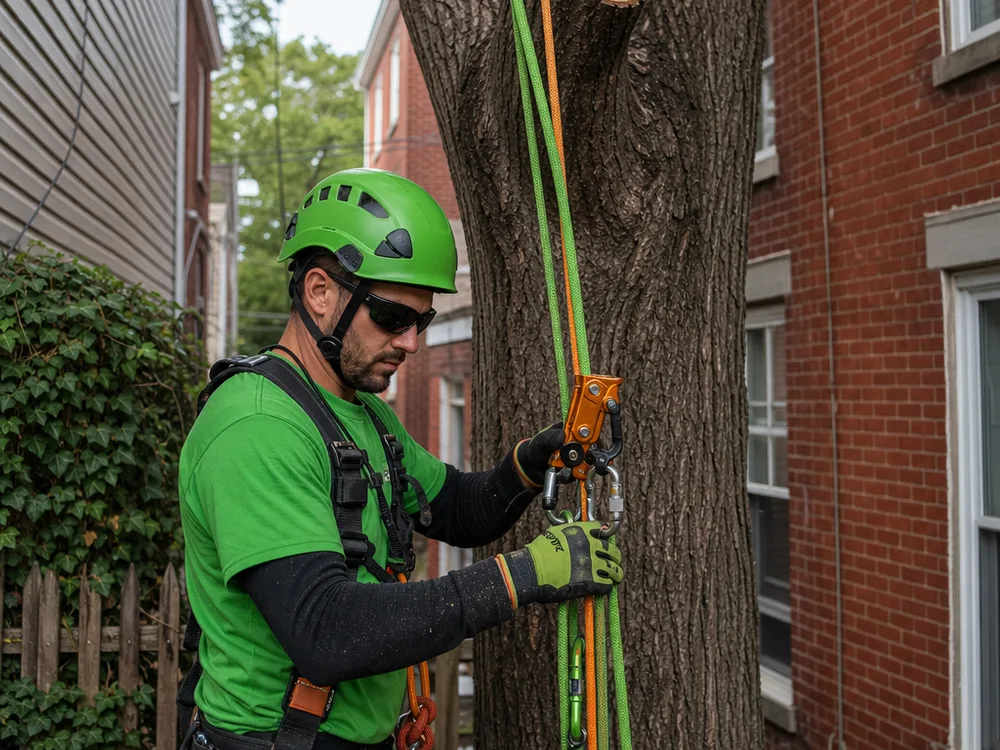
Trees overhanging rowhomes, garages, sheds, fences, patios, or parked cars typically require piecing the tree down with ropes and friction devices instead of free-felling.
If a bucket truck can't reach the tree because of tight alleys, locked rear yards, steep slopes, or narrow gates, removal takes more manual lowering and carries higher labor time.
If a tree is near overhead lines, pricing may reflect additional setup, traffic-control needs, and working constraints. Only qualified line-clearance crews should work inside minimum approach distances.
Dead, storm-damaged, hollow, or split trees cannot always be climbed safely. When climbing is unsafe, specialized rigging or a crane plan may be the safer route.
What doesn't automatically change the price
If you are still comparing providers, start with the basics: a written scope, clear inclusions for haul-off, stump work, and cleanup, plus proof of insurance. A general overview of local service options can also help explain how the work is typically handled.
Local site constraints
Baltimore properties often have features that affect pricing long before the first cut.
Tight rowhome blocks and rear access: In neighborhoods like Federal Hill and parts of Canton, rear yards can be reachable only by narrow passages or alleys. When equipment cannot get close, the crew may need to hand-carry sections or spend more time lowering pieces safely.
Historic-style lots with mature trees: Areas such as Mount Vernon and Bolton Hill tend to have older trees close to buildings. When limbs extend over roofs, porches, or slate walks, removals usually require sectional dismantling with controlled rigging.
Hilly streets and retaining walls: In parts of Hampden, sloped yards can limit where brush and logs can be staged. That can affect labor time and how debris is moved without damaging landscaping or hardscape.
Storm and saturated-ground timing: After heavy rain or wind, scheduling and access can change. Wet ground can restrict heavy equipment and increase the need for protective matting or alternate removal methods.
The most useful estimate is one built around your exact site conditions. A quick look at access points, drop zones, and targets such as fences, HVAC units, and neighboring structures usually explains why one quote is higher or lower than another.
Quote checklist
Scope
Which trees are coming down, what is being pruned versus removed, and what stays. The scope should match what you walked through on-site.
Property
How the crew will protect roofs, fencing, landscaping, and neighboring property, plus where material will be lowered and staged.
Cleanup
Whether brush is chipped on-site, whether logs are hauled away or left stacked, and what counts as final cleanup.
Options
Stump grinding is often priced separately because depth, access, and underground obstacles vary. You should know the price and grind depth upfront.
Method
If the plan depends on a bucket truck, crane, or specialty rigging, the quote should reflect that. Switching methods mid-job can change cost.
Documentation
You should be able to confirm that the company carries appropriate insurance and that the quote spells out who is responsible for what on the day of service.
Inspection to written price
We check gate widths, alley access, parking constraints, and what must be protected: roofs, fences, service drops, sheds, patios, and neighboring yards.
We evaluate lean, defects, dead wood, and whether the tree can be safely climbed. If not, we plan for equipment or alternate rigging to control each piece.
You get an estimate that spells out exactly what is included, plus add-ons like stump grinding, log stacking, or leaving mulch on-site when appropriate.
On the day of removal, the crew sets the drop zone, protects surfaces as needed, and confirms the plan before the first cut.
Brush and wood are handled as agreed, the work area is cleaned up, and we confirm the scope is complete before we leave.
Price the real site
If you want the most accurate tree removal cost Baltimore homeowners can rely on, start with an on-site look.
A real quote comes from access, risk, and cleanup needs, not a guess based on a photo.
Practical pricing answers
Transparent on-site pricing
Tell us what you are dealing with and what matters on your property—access, fences, nearby structures, and cleanup needs. Tree Removal Baltimore will confirm the scope on-site and give you transparent pricing you can plan around.